
From functioning, to living
Somatically-informed trauma and grief therapy for those who want to get to the root.
I work with people who hold it together on the outside but have lost connection with themselves in the middle of a life crisis, facing the unknown.
I help them find their way back.
Maybe you've done therapy before. You understand your history, you know your patterns by name, and none of it has changed how it feels to be inside your own life. That's not a failure of insight. It's a sign the work needs to go somewhere insight can't reach — into what's actually happening underneath the story.
Featured in…

How I work:
As a NARM Master Therapist, I work from a simple premise: CBT/talk therapy often stops at the edge of what a person already knows, and can already explain. But our adaptations to trauma are old, older than our verbal language, which is why cognitively knowing the pattern rarely changes it.
That is why our work needs to be experiential and present-focused. Instead of analyzing the past, we pay attention to what's happening right now: in your body, in your relationships, in your emotions, and the beliefs unconsciously organizing your experience.
You probably have twenty people in your life who will give you advice or tell you what they would do. What makes me different is that I will not try to fix you or rescue you from your life. I will meet you right where you’re at, with a deep respect for all that it took you to get here. Most therapists try to “help” by teaching cope skills or giving you tools, but I know a quick internet search or conversation with AI can hand you hundreds of those.
What you can’t do on your own is explore what is getting in the way, and why is it so frightening to move toward what you want. What you can’t find on AI is authentic intimacy, and a safe place to explore your responses to it.
Who this work is for:
I often work with people who have long been the steady one, or who know what it means to survive chaos. I work well people that are meeting a new side of themselves that they never knew existed. A parent trying not to pass on what they inherited. Someone who's the first in their family to do things differently. Queer folks who learned to adapt in rooms that were never built for them. Someone in the middle of grief, a diagnosis, or a season of uncertainty, who is pressured to keep up with the responsibilities of everything and everyone around them.
What I offer is a relationship with someone trained to read through your strategies and defenses, and stay with what's underneath — someone who will push back, stay focused, and is more interested in who you are than how well you're holding it together.
Medical and hereditary stress:
Some of my work sits inside a more specific world: cancer, hereditary risk, and the medical decisions that come with both.
When those enter the picture, the same survival patterns intensify. Research becomes relentless. Responsibility expands. The pressure to stay strong and informed can override the grief and fear moving underneath — grief that often has nowhere to go, because most of us were never given a place to put it.
If you're navigating cancer, a high-risk genetic mutation, IVF decisions, surgical timing, or survivorship, you may find yourself functioning remarkably well while feeling anything but steady inside.
Before I trained as a NARM therapist, I spent four years as a hospice social worker and grief counselor, sitting with people at the edge of loss — their own, and their families'. That work shaped how I understand grief: not something to move past, but something to come into relationship with. I wrote more about what that means here: Learning to Feel
In this work, we slow it down. We make room for what hasn't had room. So you can move forward connected to your whole self — not just the competent part.

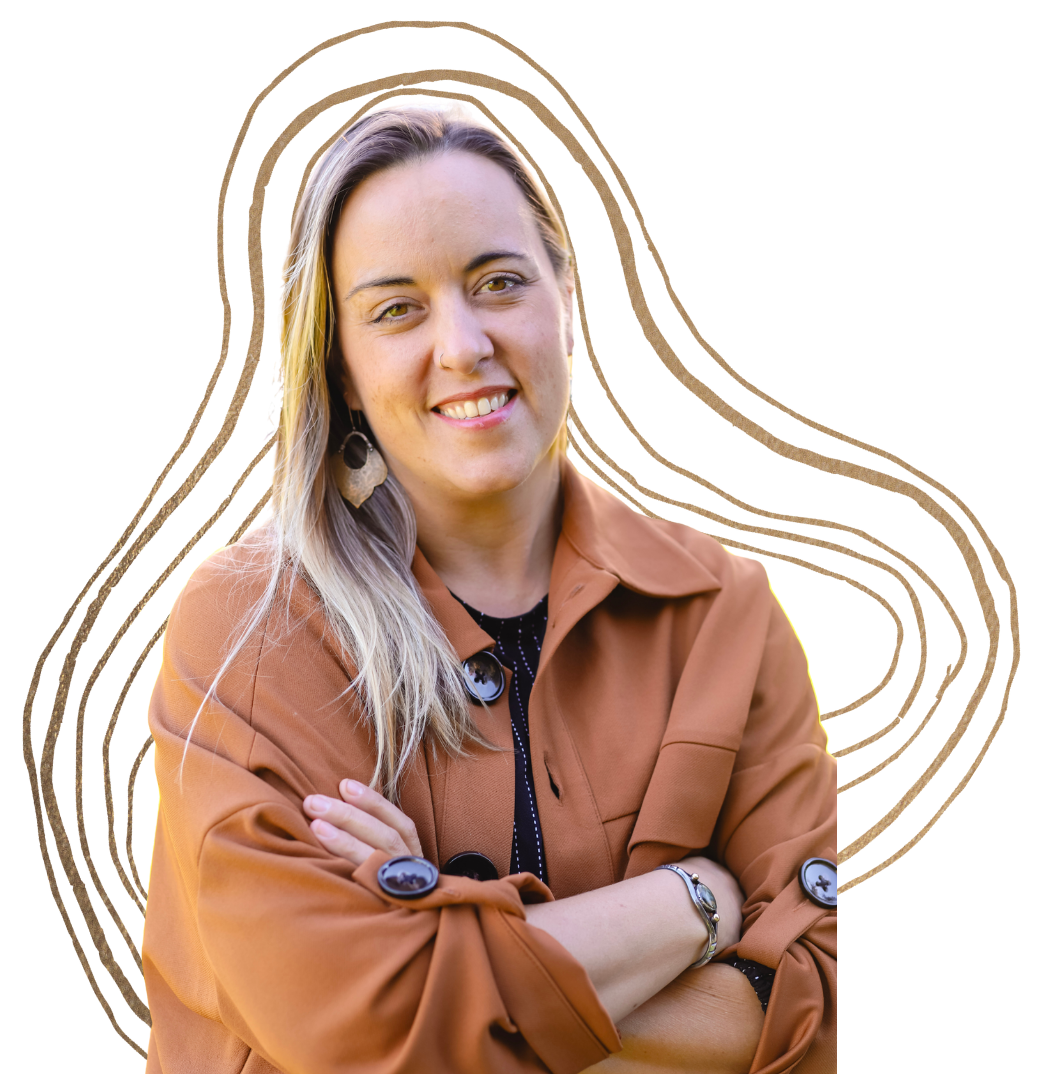
Hi, I’m Sara Champie, LCSW.
I’m a NARM Master Therapist, and my work addresses developmental trauma at its roots so that responsiveness becomes choice, not compulsion. I work with people who want more than coping — they want to feel alive again and make sense of what they’ve inherited, not just endured.
I work with anyone that is curious about how they could feel more alive and authentic. Much of my work is with people navigating cancer or living inside the constant decision-making, uncertainty, and grief that comes with hereditary risk.
Working together
Therapy here is deliberate and relational. We move thoughtfully and with precision, paying attention to patterns as they arise in real time — without forcing insight or dramatic catharsis.
Nothing is rushed. Nothing is bypassed.
If you’re ready for therapy that moves beyond coping skills and into real integration, I invite you to schedule a consultation.

Three ways we can connect
Individual Support
For California-based clients seeking one-on-one support. Therapy with me is a space to work gently and deeply with the emotional, somatic, and relational impact of trauma and long-term stress. Together, we explore how survival patterns, anxiety, and grief live in the body — and how to rebuild a sense of steadiness, agency, and connection.
Group Programs
An intimate space to connect with others who want to do the deep dive—who want to explore their process, not just their outcomes. With weekly topics, these groups offer community, shared understanding, and guided support for the emotional, relational, and generational challenges of carrying hereditary cancer risk.
Podcast
Conversations about navigating hereditary cancer risk. Join us to talk about life between the scans, and how finding out you have a genetic mutation can be a portal to emotional, relational and intergenerational healing.